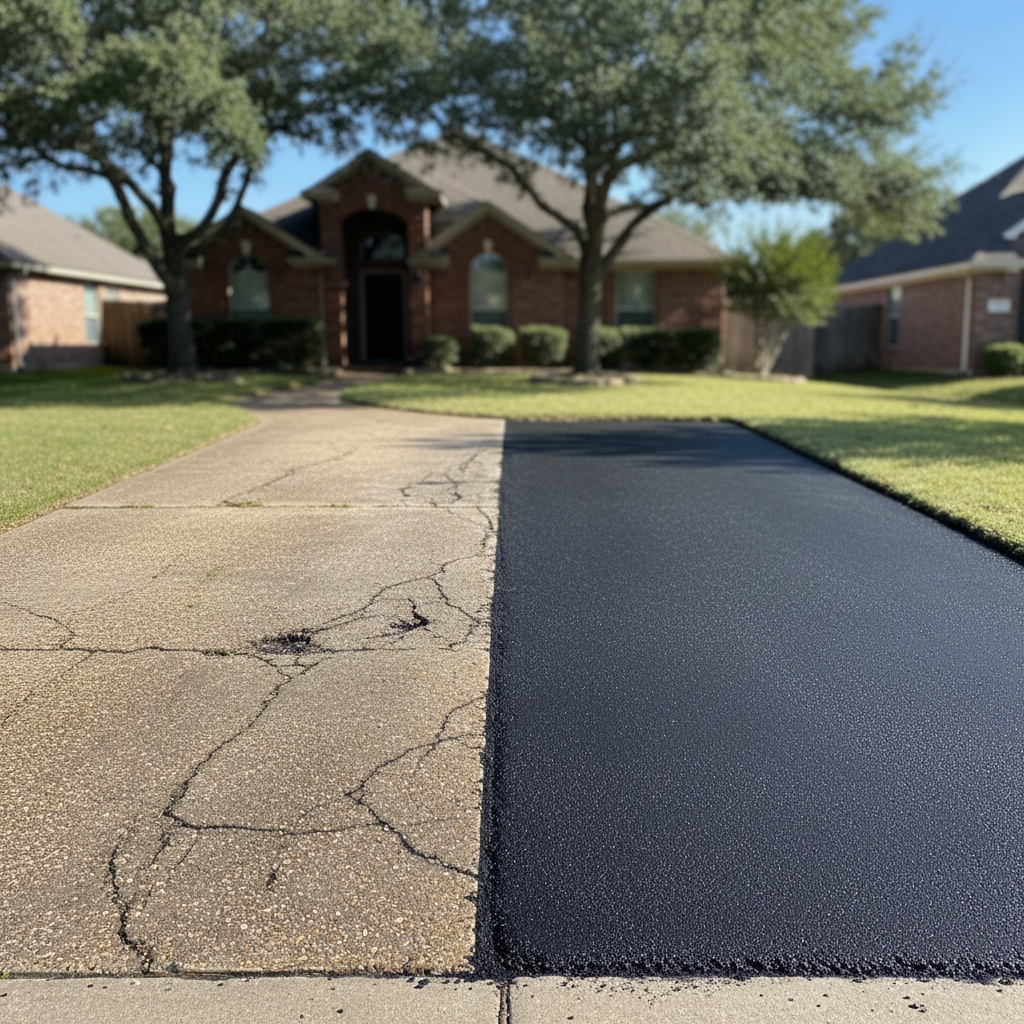
Your asphalt driveway really takes a beating, especially with our Central Texas heat and those sudden downpours. Eventually, you're going to see some cracks or potholes. When that happens, you've got a couple of main ways to patch things up: a quick surface patch or a more involved full-depth repair. I see folks try to cut corners all the time, and usually, it ends up costing them more in the long run. Let's talk about what each option actually means for your driveway, shall we?
Surface Patching: The Quick Fix
Surface patching, sometimes called skin patching or throw-and-roll, is exactly what it sounds like. You're basically putting a new layer of asphalt right over the damaged area. Think of it like putting a band-aid on a cut. You clean out the hole or crack the best you can, maybe add some tack coat to help it stick, and then you fill it with hot or cold mix asphalt. You compact it down, and boom, it looks better for a bit.
The big draw here is the cost. It's definitely cheaper upfront. You can even buy cold patch at the hardware store and do it yourself if you're feeling handy. It's quick, and it'll make your driveway look a lot better than a gaping pothole. For minor, shallow cracks that haven't really messed with the base, it can hold up for a little while.
But here's the rub: it's not very durable. You're not fixing the underlying problem. If water got under there and caused the original damage, it's probably still getting under there. The patch often doesn't bond perfectly with the old asphalt, especially if the edges aren't cut clean. You'll see it crack around the edges, or it might just pop right out after a few freeze-thaw cycles or heavy traffic. Down here in Temple, with our expansive clay soils and those big temperature swings, a surface patch often won't last through a full year without needing attention again. It's a temporary solution, pure and simple.
Full-Depth Repair: The Long-Term Solution
Now, a full-depth repair is a completely different animal. This is where you cut out the entire damaged section of asphalt, all the way down to the base layer. We're talking about removing all that old, compromised material. Once that's out, you inspect the base. If the base feels soft or looks damaged, you fix that too, adding new aggregate and compacting it properly. Then, you lay down fresh hot-mix asphalt in layers, compacting each one, until it's flush with the surrounding pavement.
This method costs more upfront, no question. It takes more time, more labor, and more material. You can't really DIY this one effectively unless you've got some serious equipment and know-how. But the benefits? They're huge. A full-depth repair addresses the root cause of the problem. You're getting rid of the bad stuff and replacing it with new, properly compacted asphalt that bonds well with the existing pavement.
Durability is where this really shines. A well-done full-depth patch can last for years, often as long as the surrounding pavement. It's much less likely to crack out, sink, or pop loose. Maintenance is minimal because you've fixed it right the first time. And in terms of appearance, when it's done professionally, it blends in much better and looks like a proper repair, not just a cover-up.
Which One Should You Choose? My Recommendation
Look, I've been doing this a long time with Absolute Asphalt Co, and I've seen it all. For homeowners in Temple, TX, if you've got anything more than the most superficial, hairline cracks, or if you have actual potholes, you need a full-depth repair. Period. I know the surface patch looks tempting because of the price tag, but it's almost always a false economy.
Our Texas weather is tough on asphalt. That constant expansion and contraction, combined with the way water can get under compromised pavement, means a quick patch just isn't going to hold up. You'll be patching it again and again, and before you know it, you've spent more than you would have on doing it right the first time. Plus, every time you patch, it gets a little uglier.
If you're selling your home, a bunch of ugly, failing surface patches isn't going to impress buyers. A proper full-depth repair shows you care about your property and its longevity. It's an investment that pays off in a good-looking driveway, better curb appeal, and far less hassle down the road. Don't just cover up the problem; fix it for good.