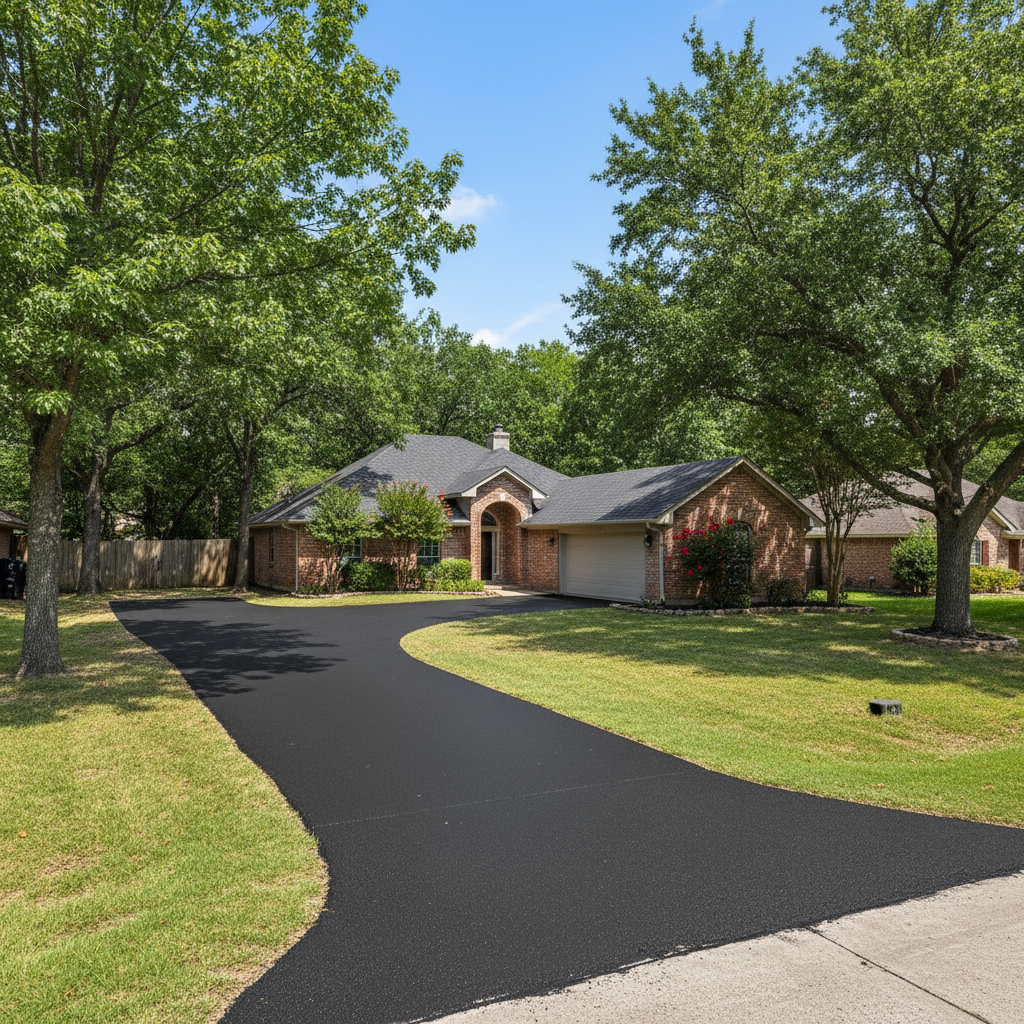
Alright, let's talk about sealcoating. It's one of those maintenance jobs that can really extend the life of your asphalt driveway, but you've gotta plan it right. You don't just wake up one Saturday and decide it's sealcoat day, you know? There's a bit more to it, especially here in Temple with our crazy Texas weather. I've seen plenty of driveways over the years, and a good plan makes all the difference.
Understanding the Timeline: When to Sealcoat
Timing is everything with sealcoating. You can't just throw it down whenever. The main thing we need is consistent warm, dry weather. That means daytime temperatures usually need to be above 50 degrees Fahrenheit, and nighttime temps shouldn't drop much below that either. You also need a good 24-48 hours of no rain after we've applied it. Here in Temple, that usually puts us in the spring, summer, and early fall months. March through October is generally your sweet spot, helping us avoid those really cold snaps in winter and those pop-up thunderstorms that can ruin a fresh coat.
A typical sealcoating project, from start to finish, usually takes a couple of days. The actual application might only be a few hours, but the curing process is what takes the time. You're looking at needing to keep vehicles off it for at least 24-48 hours, sometimes longer if it's humid or cooler. Foot traffic can usually resume sooner, but still, give it a good half-day.
What to Expect During the Process
So, you've decided to get it done. What's going to happen? First, any good contractor will start with a thorough cleaning. We're talking about blowing off loose debris, sweeping, and maybe even power washing if there's a lot of dirt or grime. Any oil spots or stains will need pre-treatment too; otherwise, the sealcoat won't stick right. Then, we'll address any cracks. Small cracks get filled with a hot rubberized crack filler. If you've got bigger potholes or major damage, that's a repair job that needs to happen before sealcoating, not during.
Once the surface is clean and prepped, the sealcoat goes down. Most of the time, we'll apply two coats. The first coat dries, then the second one goes on. This gives you better protection and a more uniform finish. We'll usually use brushes or squeegees for edges and smaller areas, and then sprayers for the main body of the driveway. It's a pretty straightforward process, but we need to do it carefully to avoid streaks or uneven coverage.
How You Can Prepare Your Driveway
You've got a role to play too! Before the crew shows up, you can make their job, and your life, a lot easier. First, clear your driveway completely. Move your cars, bikes, trash cans, basketball hoops — anything that's sitting on the asphalt. If you've got a lot of leaves or debris, give it a good sweep yourself. Trim back any low-hanging branches or bushes that might get in the way of equipment or make it hard to get to the edges of the driveway. If you have sprinklers, make sure they're turned off for at least 24 hours before and after the sealcoating. You certainly don't want water spraying onto a fresh coat.
Also, make sure kids and pets know to stay off the driveway during the work and while it's curing. That stuff is sticky, and you don't want paw prints or shoe prints embedded in your new finish. A little preparation on your end goes a long way in making the whole project run smoothly.
Crucial Questions to Ask Before Signing a Contract
Before you shake hands and sign on the dotted line, you need to ask some pointed questions. This isn't just about getting the best price; it's about getting a quality job that lasts. Here are a few I'd recommend:
- What kind of sealcoat product do you use? There are different types out there. Coal tar emulsion is common, but asphalt emulsion is another option. Ask them to explain the difference and why they choose what they use.
- How many coats will you apply? Like I said, two coats are usually standard and give the best protection. If they only plan one, ask why.
- What's your process for crack filling and oil spot treatment? You want to know they're not just going to seal over problems.
- What's the weather contingency plan? What happens if it rains unexpectedly? Will they reschedule, or will they try to work around it?
- What's the warranty or guarantee on your work? A reputable company, like us at Absolute Asphalt Co, will stand behind their work. Ask what's covered and for how long.
- Can you provide references? Any good contractor should be happy to give you a few names of past clients you can call.
- Are you licensed and insured? This is non-negotiable. You want to make sure they're properly covered in case of an accident. Don't just take their word for it; ask for proof.
Asking these questions upfront will save you headaches down the road. You're investing in your home, so make sure you're getting a professional job. A well-maintained driveway adds curb appeal and value, and sealcoating is a big part of that maintenance. Do your homework, ask the right questions, and you'll be happy with the results.